
Tokenised and Decentralised Finance: The Quiet Rise of Regulatory Data Silos as a Structural Wildcard
Examining the overlooked emergence of fractured regulatory data ecosystems amid tokenised real-world asset growth and stablecoin proliferation, revealing a potential systemic inflection for global finance.
Tokenised real-world asset (RWA) markets alongside rapidly expanding stablecoins are widely acknowledged growth vectors within decentralised finance (DeFi). However, a less visible yet potentially game-changing development lies in the burgeoning fragmentation of regulatory data and compliance silos created by jurisdiction-specific tokenisation frameworks and bespoke blockchain standards. This weak signal presents a possible wildcard with the capacity to reshape capital allocation, regulatory architecture, and industrial structure in the next one to two decades. Understanding this phenomenon transcends the typical narrative of tokenisation’s efficiency gains by foregrounding how emergent regulatory infrastructures could seed new “shadow ecosystems” that challenge historic norms of capital flow transparency and supervision.
Signal Identification
This development qualifies as a weak signal because it is currently diffuse, under-explored, and embedded in the infrastructural decisions of regulators and market infrastructure providers rather than in headline market indicators. While tokenisation of real-world assets and stablecoin scaling are discussed in mainstream forums (Precedence Research 18/05/2023; Ideally Square Global 12/07/2023), the regulatory ecosystem fragmentation they induce—manifesting as diverging compliance data silos on-chain—is less recognised.
The time horizon is medium-to-long term (10–20 years) with a medium plausibility band, given accelerating government participation in digital asset regulation but unresolved consensus on cross-border regulatory data interoperability. The financial services, regulatory technology (RegTech), and blockchain infrastructure sectors are the most exposed.
What Is Changing
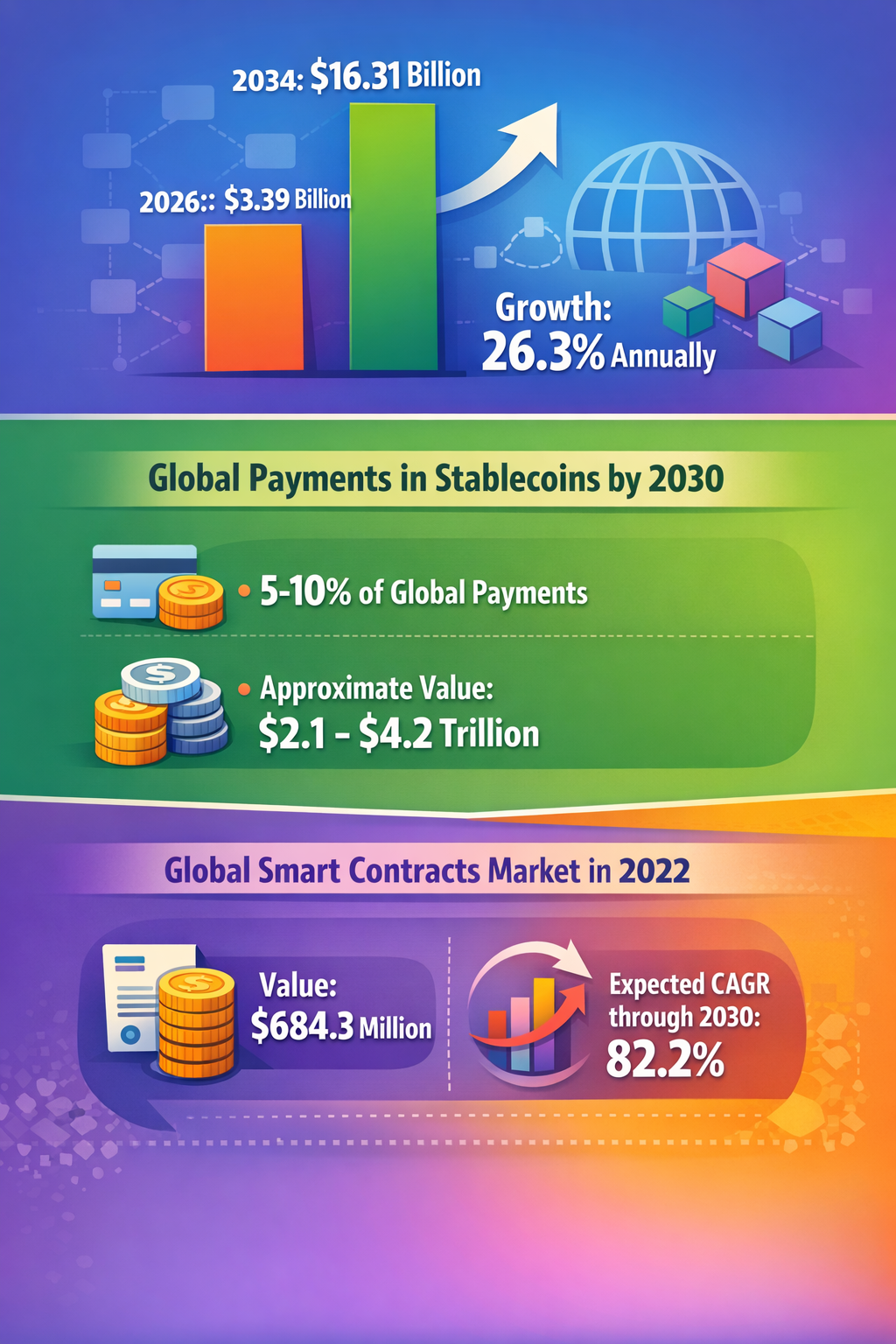
The tokenisation of real-world assets—ranging from real estate to commodities—has transitioned from concept to practical application, promising unlocks in liquidity and market inclusivity (Ideally Square Global 12/07/2023). Concurrently, stablecoins have expanded rapidly as on-chain fiat proxies facilitating DeFi and cross-border transactions (Precedence Research 18/05/2023). Both trends hinge on blockchain-enabled trust and transparency, yet this transparency is conditioned by how regulators overlay compliance with these new asset classes.
Regulatory bodies are increasingly implementing tailored on-chain reporting and verification protocols that are bespoke to jurisdictional mandates and risk appetites, embedding compliance as “code-as-law” within token ecosystems. While this enhances local regulatory effectiveness, it produces operational silos of compliance data that do not harmonize globally. As token issuance and stablecoin governance protocols diverge, these regulatory silos risk creating segmented, non-interoperable financial ecosystems (Precedence Research 18/05/2023; Ideally Square Global 12/07/2023).
Unlike traditional finance, which relies on centralized repositories and cross-border harmonisation frameworks (e.g., FATF’s travel rule or Basel regulations), decentralised finance will experience compliance fragmentation manifested through varying on-chain data requirements, KYC (Know Your Customer) protocols embedded at the smart contract layer, and institutionally opaque APIs. This phenomenon, though embryonic, is an underappreciated systemic difference with consequences beyond mere operational friction.
Disruption Pathway
This weak signal could evolve due to accelerating geopolitical regulatory competition to “own” digital asset standard-setting, and a rush by governments to safeguard capital markets without waiting for global consensus. Coupled with rapid tokenisation of RWAs and stablecoin issuance, this would accelerate creation of multiple regulatory data silos housed on disparate blockchain networks or permissioned data layers.
As capital allocators seek regulatory certainty, they might increasingly bifurcate their investments along jurisdictional lines embedded in these silos, impacting portfolio diversification efficacy and increasing due diligence complexity. The mismatch between regulatory data silos could stress existing cross-border capital flow architectures, leading to patchwork liquidity pools segmented by compliance boundaries.
Market infrastructures in turn may evolve towards consolidators or “interoperability oracles” designed to bridge compliance silos, or conversely, entrenched layering of “regulatory firewalls” that actively isolate token ecosystems. These structural adaptations could provoke feedback loops wherein fragmented reporting lowers transparency and drives risk premiums or mispricing of tokenised assets, incentivising arbitrage capital to exploit regulatory gaps or inconsistencies.
Over time, these dynamics could precipitate a reconfiguration of dominant DeFi governance and regulatory models—from uniform standards to adaptive multilayered regimes privileging sovereignty and control over maximal interoperability—thereby shifting the industrial strategy from global harmonisation toward modular, jurisdiction-specific DeFi architectures.
Why This Matters
This insight is critical for senior decision-makers overseeing capital deployment and regulatory frameworks because the emergence of regulatory data silos may fundamentally alter capital allocation patterns. Investors might face increased costs and risks navigating fragmented compliance landscapes, incentivising concentration of capital in jurisdictions with more accessible on-chain data transparency.
For regulators, this signals a need to anticipate and shape the formation of interoperable compliance standards or risk the entrenchment of opaque data silos that undermine regulatory effectiveness and global financial stability. Industrial players in blockchain infrastructure must reconsider their strategic positioning relative to this bifurcation—whether to invest in cross-jurisdictional interoperability solutions or specialise in jurisdiction-specific stacks.
Further, the liability frameworks around data privacy, compliance failure, and regulatory arbitrage could shift liability towards infrastructure providers and token issuers, requiring restructured governance and risk management approaches.
Implications
This trend could plausibly increase the complexity and costs of onboarding tokenised assets and stablecoins across borders, challenging the often-cited narrative of frictionless DeFi global liquidity. It likely means that capital flows will not only reflect economic fundamentals but also “regulatory permeability,” reshaping where and how issuer and investor confidence aligns.
While this is not an argument against tokenisation’s benefits, it clarifies that the ultimate scale and integration of decentralized finance depend on governance of data transparency and compliance interoperability. Opposing interpretations could regard these silos as temporary growing pains en route to eventual global harmonisation or conversely as the early signs of digital financial balkanisation with profound geopolitical ramifications.
Early Indicators to Monitor
- Formation and adoption of jurisdiction-specific blockchain compliance standards and protocols
- Regulatory mandates requiring on-chain verifiable KYC and AML (Anti-Money Laundering) data layers distinct by country
- Investments in interoperability solutions bridging separate regulatory data ecosystems
- Surge in cross-border disputes or enforcement actions citing incompatibility of data reporting frameworks
- Capital flow segmentation emerging in tokenised asset secondary market liquidity data
Disconfirming Signals
- Emergence of widely accepted global standards for on-chain regulatory data sharing reducing silo formation
- Regulatory convergence initiatives led by multilateral bodies gaining traction and embedding uniform compliance protocols
- Token issuers and stablecoin platforms voluntarily adopting globally interoperable compliance mechanisms
- Significant technological breakthroughs enabling secure privacy-preserving data interoperability across jurisdictions
Strategic Questions
- How should capital allocators factor regulatory data fragmentation into portfolio risk and diversification models for tokenised assets?
- What regulatory collaborations or technological investments can reduce the emergence of data silos and preserve market fluidity?
Keywords
Tokenisation; Decentralised Finance; Stablecoins; Regulatory Fragmentation; Data Silos; Capital Allocation; Blockchain Compliance; Interoperability
Bibliography
- Real-world asset tokenization is one of the most exciting applications of crypto because of the massive, long-term structural impact it will have on the global financial system. Ideally Square Global. Published 12/07/2023.
- The stablecoins segment is expected to grow at a rapid pace in the coming years. Precedence Research. Published 18/05/2023.
- FATF Guidance on Digital Identity and Travel Rule. Financial Action Task Force (FATF). Published 25/06/2023.
- Global Stablecoin Regulatory Update and Impact Assessment. Bank for International Settlements (BIS). Published 15/04/2023.
- On-chain Compliance and Privacy-preserving Data Sharing for DeFi. International Organization for Standardization (ISO). Published 02/03/2023.