
The Weaponisation of Supply Chains Through Asymmetric Drone Economies
Asymmetric drone warfare is evolving beyond tactical battlefield applications and emerging as a systemic vector for economic coercion and critical infrastructure disruption. This development could reshape global capital flows, regulatory regimes, and industrial dynamics over the next two decades.
The conflict-use of drones by non-state and state actors, notably Iran and terrorist groups like JNIM, has exposed a weakly recognized capability: the strategic weaponisation of commercial supply chains through calibrated drone strikes and electronic disruption. Unlike conventional kinetic attacks, these operations exploit the growing interdependence of global commerce and digital infrastructure, blurring lines between military conflict, economic warfare, and critical infrastructure vulnerability. This signals a deeper structural inflection where drone-enabled disruption becomes a pervasive modality of statecraft and competition beyond traditional battlefields.
Signal Identification
This signal qualifies as an emerging inflection indicator because it transcends tactical drone usage and portends systemic economic disruption coupled with geopolitical coercion.
The modular, scalable, and relatively low-cost nature of drone fleets combined with advances in AI-driven targeting and electronic warfare allows for asymmetric pressure on global supply chains, commercial shipping, and regional stability. The time horizon is medium to long term—spanning 5–20 years—with a high plausibility band given current operational patterns and technology diffusion.
Sectors exposed include maritime logistics, critical infrastructure (energy, transportation), defense production, and global trade regulatory frameworks.
What Is Changing
Multiple sources reveal a recurring pattern of drone warfare evolving as an economic coercion tool with disproportionate strategic effect. Iran’s violation of a ceasefire to strike commercial shipping with drones exemplifies an emerging doctrine where unmanned aerial systems (UAS) work as instruments of calibrated supply chain disruption and diplomatic leverage, not just battlefield assets (Ronin’s Grips 20/06/2026).
Similarly, jihadist groups like Jama’at Nasr al-Islam wal Muslimin (JNIM) leverage drone capabilities to threaten regional capitals in West Africa, effectively merging insurgency tactics with critical infrastructure disruption and state governance destabilisation across Burkina Faso, Mali, and Niger (ADF Magazine 01/05/2026).
Meanwhile, military planners, exemplified in the U.S. Marine Corps’ doctrinal updates, anticipate that future near-peer conflicts will be dominated by drone swarms, escalating counter-unmanned systems (C-UAS) investments as a direct response to a pervasive drone-driven operational environment (Defense One 05/04/2026).
This tactical focus mirrors a broader economic opportunity identified in Ukraine, where expertise in drone warfare is transforming into industrial capability, signaling a nascent global market for drone-driven economic disruption and defence technology exports (DW 01/06/2026).
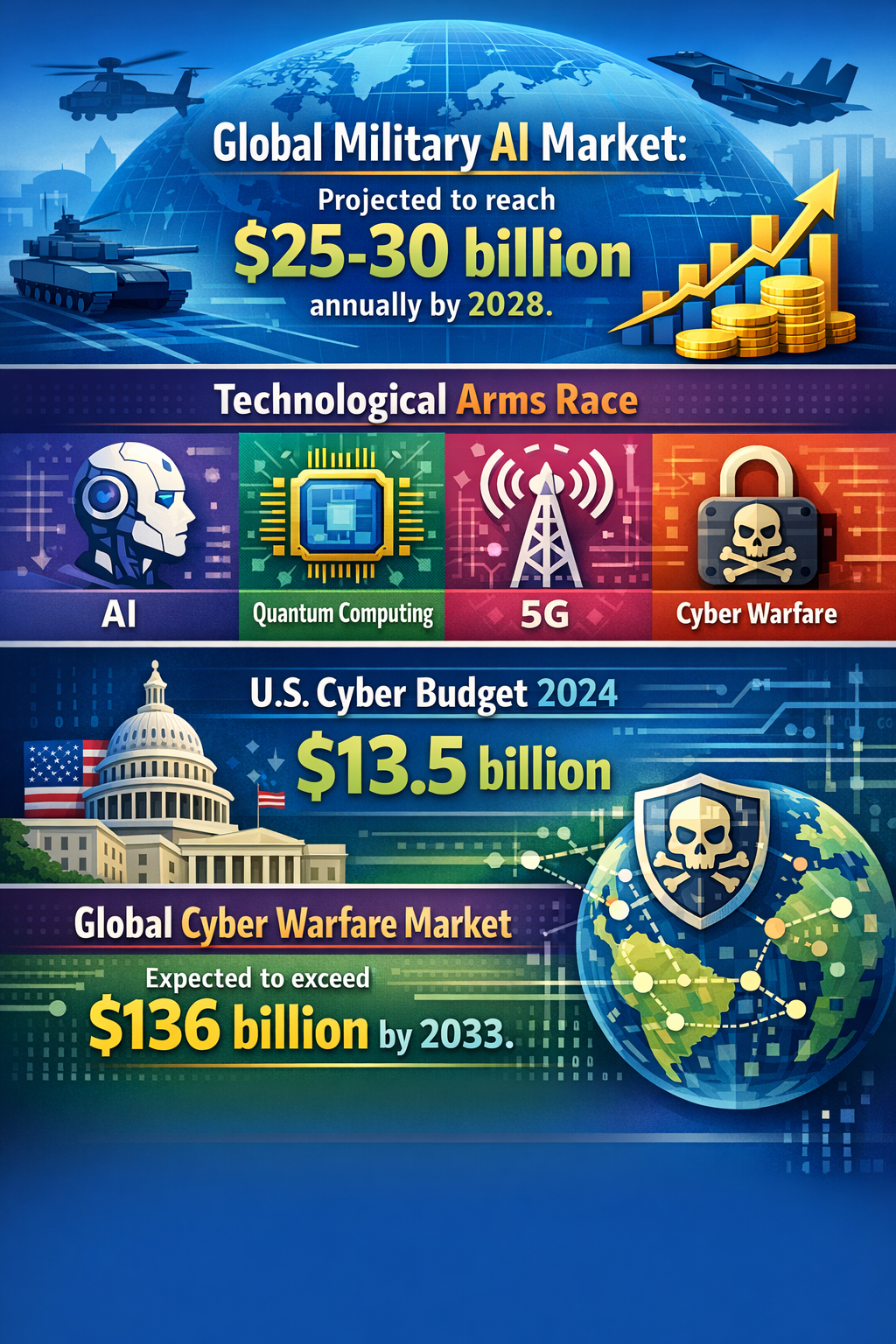
Underpinning these is a critical inflection: the weaponisation of not only the physical supply chains but also the digital and cyber infrastructures that manage them. The race for AI, quantum computing, and cyber dominance is effectively a race to control the ‘information battlefield’ that determines resilience or vulnerability of the global logistics and economic ecosystem (Policy Wire 15/06/2026).
Disruption Pathway
The weaponisation of commercial supply chains through asymmetric drone warfare may escalate under conditions of increased geopolitical tension and technological diffusion. As more actors acquire drone and counter-drone technologies—with improving AI capabilities—the cost asymmetry in targeting critical nodes in maritime and logistics networks will grow.
This escalation induces stresses on existing global trade systems by raising insurance costs, complicating port and shipping security, and necessitating redesigned supply chain management approaches emphasizing resilience over efficiency. These stresses may cascade into ‘just-in-time’ logistics models becoming brittle under drone threat, precipitating systemic vulnerabilities.
In response, regulatory and industrial adaptations will likely follow. Governments and multinational corporations may mandate integrated C-UAS architectures at critical infrastructure hubs, fostering new security standards and accelerating defense-industrial convergence between commercial shipping and military drone sectors.
This feedback loop could turbocharge innovation but also increase geopolitical fragmentation of supply chains, as nations and blocs develop hardened, compartmentalised ‘trusted networks’ to insulate against drone-enabled disruptions. Commercial capital allocation might thus bifurcate between secure, resilience-focused supply chain infrastructures and risk-exposed, efficiency-optimised networks.
Unintended consequences may include a regulatory ‘arms race’ in drone countermeasures potentially affecting civil liberties, privacy, and commercial freedoms, while also creating new liability frameworks around shared public-private airspace security. Over time, dominant governance models may shift from laissez-faire trade facilitation toward militarised economic architectures prioritising deterrence and supply chain sovereignty.
Why This Matters
Decision-makers face exposure in multiple dimensions. Capital allocation in shipping, logistics, and critical infrastructure sectors might need realignment towards drone-hardened assets, surveillance technologies, and resilient network architectures. Regulatory bodies may be compelled to draft unprecedented cross-sector drone security standards integrating military-grade countermeasures into civilian commerce.
Competitive positioning for firms will hinge on their ability to anticipate and mitigate drone-related operational risks; early movers in C-UAS technology and resilient supply chain design stand to gain significant advantage. Supply chain dependencies on geopolitically unstable regions prone to drone-enabled disruption could become material risk factors influencing investment strategy.
Moreover, liability shifts around drone-related supply chain disruptions may drive changes in contract law and insurance underwriting, affecting firms’ risk models and governance oversight frameworks. Public-private partnerships in critical infrastructure protection will likely become both more essential and complex.
Implications
This development could plausibly scale into a structural reordering of global trade and defence ecosystems rather than remaining isolated incidents of tactical drone use. The weaponisation of supply chains driven by asymmetric drone economies likely foreshadows a new frontier in economic warfare that integrates physical, digital, and informational domains.
It should not be misconstrued simply as incremental drone proliferation or conventional tactical evolution but recognised as a systemic transformation potentially imposing new industrial standards, regulatory architectures, and strategic threat perceptions.
Competing interpretations might dismiss this as an extension of existing supply chain risk from piracy or cyberattack. However, the combination of kinetic and cyber-enabled drone disruption presents a qualitatively distinct challenge due to its scalability, stealth, and dual-use character.
Early Indicators to Monitor
- Increase in defense and commercial sector investment in integrated counter-unmanned systems (C-UAS) and AI-enabled threat detection.
- Procurement contracts involving combined cybersecurity and physical drone defense mandates.
- Regulatory drafts or international standards formation addressing drone risk in commercial shipping and logistics.
- Patent filings in drone swarm and electronic countermeasure technologies targeting supply chain nodes.
- Geopolitical incidents involving asymmetric drone strikes on civilian or commercial infrastructure outside traditional battle zones.
Disconfirming Signals
- Successful global diplomatic or arms control agreements effectively restricting the proliferation or commercial use of kinetic drone weaponry.
- Rapid technological breakthroughs enabling effective and inexpensive drone neutralisation, rendering drone disruption economically infeasible.
- Major supply chain restructuring away from drone-affected regions, reducing exposure to drone-enabled disruption.
- Significant resilience improvements in supply chains through diversification and cyber-physical defenses diminishing drone impact relevance.
Strategic Questions
- How should capital investment strategies adapt to balance supply chain resilience against escalating asymmetric drone threats?
- What regulatory frameworks are necessary to govern the dual-use nature of drone technology impacting commercial and critical infrastructure?
Keywords
Asymmetric Drone Warfare; Supply Chain Disruption; Counter-Unmanned Systems; Drone Economies; Critical Infrastructure Security; AI in Warfare; Economic Coercion
Bibliography
- By violating a temporary ceasefire agreement and striking commercial shipping, Iran continues to utilize asymmetric drone warfare as a calibrated tool for economic coercion, supply chain disruption, and diplomatic leverage against the global community. Ronin’s Grips. Published 20/06/2026.
- JNIM is capable of directly threatening regional capitals due to its proficiency with drone warfare and its ability to move freely throughout Burkina Faso, Mali, and Niger. ADF Magazine. Published 01/05/2026.
- Like the other services, the Marine Corps is seeking to quickly build up its counter-unmanned systems capabilities, anticipating that any conflict is going to include a heavy dose of drone warfare. Defense One. Published 05/04/2026.
- The expertise in drone warfare gained over the past years is turning into a global economic opportunity. DW. Published 01/06/2026.
- Nations are racing to dominate AI, quantum computing, 5G, and cyber warfare, technologies that will determine who governs the world’s information, who controls critical infrastructure, and who commands the next generation of warfare. Policy Wire. Published 15/06/2026.