
Regenerative Agriculture Carbon Credits: An Under-recognized Inflection in Green Finance
Exploring the emergent market for carbon credits in regenerative agriculture reveals a latent structural disruptor in green and sustainable finance with far-reaching consequences for capital flow, regulatory reform, and industrial realignment over the next two decades.
The burgeoning opportunity of monetizing carbon sequestration through regenerative agriculture represents a weak signal in sustainable finance. While carbon markets and green bonds dominate discourse, the unique intersection of agriculture, climate finance, and decentralized carbon accounting is insufficiently recognized. This signal potentially initiates a new asset class transforming capital deployment, especially in rural economies, and challenges existing carbon market frameworks. Its maturation within a 10 to 20-year horizon carries medium to high plausibility and could reshape multiple sectors including agriculture, finance, climate policy, and supply chain management.
Signal Identification
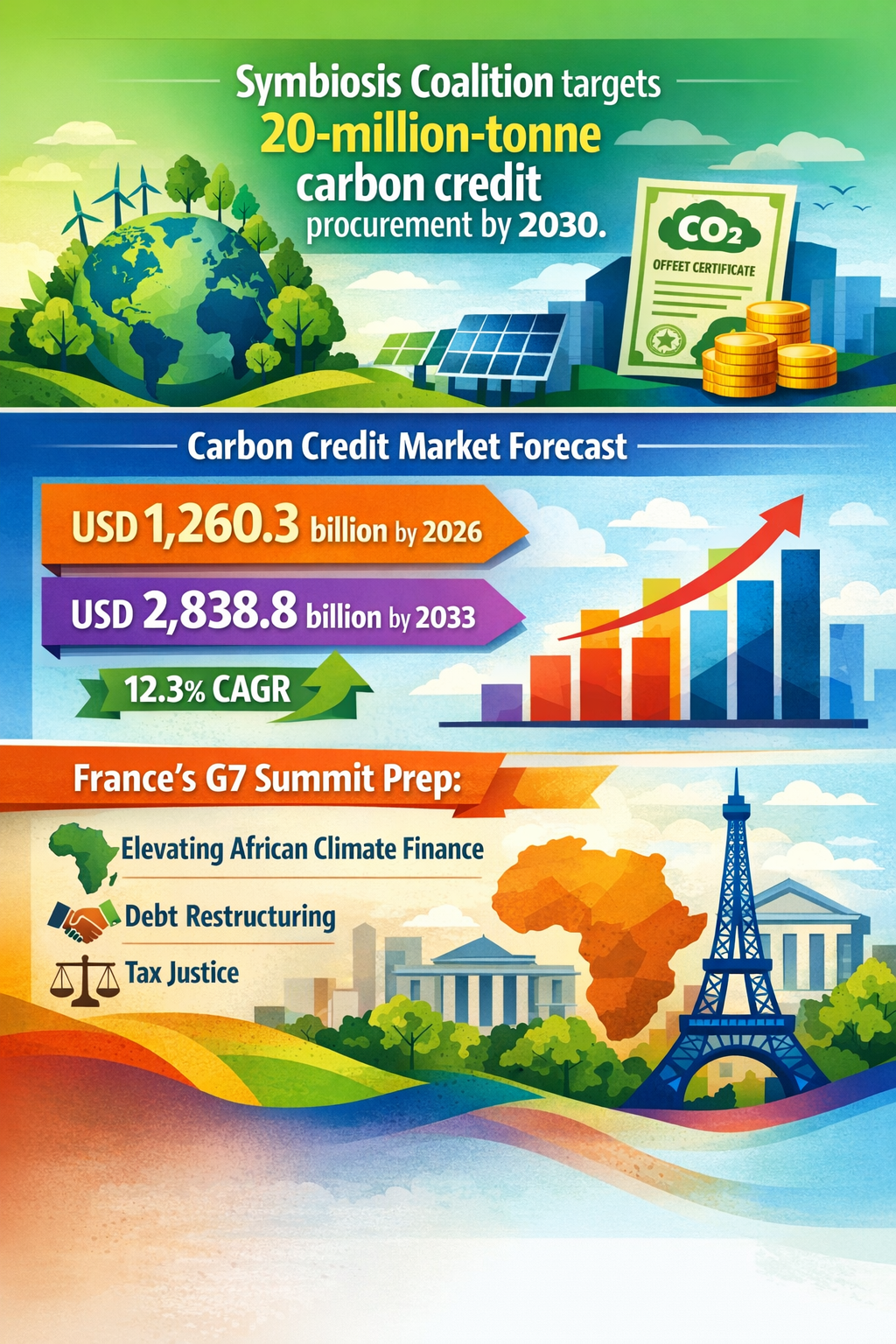
This development is classified as an emerging inflection indicator, as regenerative agriculture carbon credits are evolving beyond nascent project-based trading into a scalable financial instrument with systemic implications. Unlike traditional carbon markets plagued by inconsistent standardization and regulatory gaps (Business 20 Channel TV 30/04/2026), regenerative agriculture leverages novel verification methodologies tied to soil health, biodiversity, and long-term sequestration. The estimated 2030 market projection of multi-billion dollar revenues (Persistence Market Research 26/04/2026) demonstrates plausible capital inflows in 10-20 years, positioning this as a medium to high plausibility scenario impacting agriculture, climate finance, and environmental regulation sectors.
What Is Changing
Three recurring themes emerge from the available evidence that collectively point to a structural shift:
First, carbon-credit markets currently lack the standardization and regulatory oversight characteristic of mature energy markets, introducing unique counterparty and price-discovery risks (Business 20 Channel TV 30/04/2026). Regenerative agriculture credits, by integrating scientifically robust soil carbon measurement technologies and ecosystem service metrics, address these limitations and may thus function as more transparent and credible carbon assets.
Second, the integration of regenerative agriculture carbon credits presents a distinct industrial theme: financialization of ecological stewardship in rural economies. Such credits not only incentivize carbon sequestration but catalyze investment into novel farm management practices, merging agricultural innovation with climate finance markets (Persistence Market Research 26/04/2026). This could redistribute capital flows away from urban-centric green projects toward decentralized agricultural actors.
Third, there is a geopolitical and monetary dimension tied to Europe’s leadership in sustainable finance, especially green bonds denominated in euros (European Central Bank 20/06/2026). This leadership primes regulatory and market frameworks for recognizing robust, standardized environmental assets in a currency zone seeking greater global influence. Consequently, regenerative agriculture carbon credits could become a part of the euro-denominated green financial ecosystem, amplifying Europe’s strategic positioning in climate capital markets.
Furthermore, the need for equitable climate finance finds resonance in African priorities like debt restructuring and economic transformation (Greenpeace Africa 02/05/2026), suggesting that distributed carbon credit models tied to regenerative agriculture may also serve as innovative pathways for inclusive climate financing in emerging markets. This dynamic, under-explored in conventional green finance narratives, points to a potential wildcard in global capital allocation strategies.
Disruption Pathway
The regenerative agriculture carbon credit market could evolve into structural change through a sequence of reinforcing dynamics. Initially, advances in digital verification technologies—such as satellite imaging, blockchain-based traceability, and AI-driven soil analytics—may reduce verification costs and counterparty risk, accelerating market participation and investor confidence. This may unlock substantial capital inflows from institutional investors seeking decarbonization-aligned assets diversified beyond traditional energy sectors.
As capital flows expand, they introduce stress on existing carbon markets characterized by legacy contract structures and geographic concentration. Farmers and rural enterprises may gain leverage in negotiating carbon credit prices and conditions, inducing fragmentation or transformation of dominant issuer and broker intermediaries. Regulatory agencies could face pressure to harmonize standards globally, considering the complex intersectionality of agriculture, environmental integrity, and financial compliance.
Following this, structural adaptations may include emergent self-regulatory organizations or international bodies establishing certification standards that integrate soil health, regenerative metrics, and social impact criteria. These could supplant or evolve beyond current voluntary carbon market protocols, aligning incentives more closely with biodiversity and economic development outcomes.
Feedback loops could arise as expanding regenerative agriculture projects improve ecosystem services, boost rural incomes, and increase political capital for supportive policies. Conversely, unintended consequences may emerge, such as land tenure disputes or “greenwashing” risks if verification standards lag deployment speed. Industrial incumbents in agrochemicals and conventional farming may lobby to slow or co-opt market progression, shaping governance outcomes.
Eventually, this dynamic could shift dominant regulatory and governance models from state-centric carbon allowances toward decentralized, multipolar frameworks that integrate ecological stewardship as a mainstream financial asset class. This paradigm would expand the scope of sustainable finance beyond energy transition into ecosystem regeneration, redistributing capital and influence across sectors and geographies.
Why This Matters
Strategic leaders responsible for capital deployment must recognize that regenerative agriculture carbon credits could redirect investment flows at scale by creating new asset classes anchored in natural capital. This shift may broaden green finance beyond energy and industrial decarbonization into agriculture and rural development, diversifying risk and returns.
Regulators should anticipate challenges in standard-setting, verification, and cross-sectoral oversight. Integrative approaches may be necessary to align agriculture, environment, and finance ministries, as well as international climate bodies, to prevent fragmentation or regulatory arbitrage.
Competitive positioning for financial institutions and agribusinesses could hinge on early adoption and integration of regenerative carbon credit models. Supply chains linking food production, processing, and distribution might reconfigure to capture value in carbon sequestration services, altering bargaining power and liability structures.
Governance consequences extend to global climate justice considerations, as distributed carbon finance may empower emerging economies and marginalized rural communities previously excluded from mainstream green finance, potentially rebalancing global climate economic relations.
Implications
This development could significantly alter capital allocation by creating viable, investible regenerative agriculture-related carbon credit products that finance sustainable land management on a global scale. Capital markets may increasingly price in ecological regeneration metrics in a manner currently unwitnessed.
It might also prompt regulatory innovations to establish globally recognized, enforceable standards for agricultural carbon credits, heightening transparency and reducing market fragmentation compared to existing voluntary carbon markets. However, this is not mere incremental growth of carbon markets but a qualitative expansion linking natural capital, finance, and rural economies.
Competing interpretations may argue that technical and scale challenges, verification lags, or political resistance will limit systemic impact. Another view could treat regenerative agriculture credits as an extension of existing carbon market hype prone to volatility. Nonetheless, the multi-sectoral integration and socio-political implications lend this signal a credibility to evolve structurally.
Early Indicators to Monitor
- Launch of standardized contract frameworks and regulatory guidance specific to regenerative agriculture carbon credits
- Volume and velocity of venture and institutional funding directed to regenerative agriculture projects linked to carbon markets
- Emergence of independent third-party verification and certification bodies focused on soil carbon and regenerative metrics
- Policy announcements or frameworks aligning agriculture, environmental, and financial regulation around regenerative finance
- Capital reallocation trends within green bonds and sustainable finance instruments denominated in euros incorporating agriculture-based credits
Disconfirming Signals
- Failure to establish reliable, cost-effective carbon verification systems for regenerative agriculture within the next decade
- Regulatory clampdowns or legal disputes leading to market fragmentation or withdrawal from regenerative agriculture carbon credit trading
- Dominance of competing carbon removal technologies (e.g., direct air capture) sidelining soil carbon finance
- Lack of investor interest or capital flight from agricultural carbon credits due to perceived high risk or low liquidity
- Geopolitical tensions preventing international harmonization of carbon credit standards, especially between developed and emerging markets
Strategic Questions
- How should sovereign and financial regulators proactively engage to develop adaptive standards integrating regenerative agriculture into carbon markets?
- What incentives and risk management frameworks will mobilize capital flow toward regenerative carbon credits without exacerbating social inequalities or market distortions?
Keywords
Carbon Credit; Regenerative Agriculture; Green Finance; Soil Carbon Sequestration; Carbon Markets; Sustainable Finance Regulation; Natural Capital; Climate Finance
Bibliography
- Carbon-credit markets lack the standardised contract structures and regulatory oversight of electricity markets, which introduces counterparty and price-discovery risks that do not exist in conventional PPA frameworks. Business 20 Channel TV. Published 30/04/2026.
- Carbon credit revenues in regenerative agriculture could reach several billion dollars annually by 2030, incentivizing widespread adoption and catalyzing investment in novel management practices. Persistence Market Research. Published 26/04/2026.
- Europe's leadership in sustainable finance and green bonds presents an opportunity to expand the global use of the euro. European Central Bank. Published 20/06/2026.
- With France preparing to host the G7 Summit in Evian next month, Nairobi presents an important opportunity to elevate African priorities on climate finance, debt restructuring, tax justice and reform of the global financial system onto the broader international agenda. Greenpeace Africa. Published 02/05/2026.