
Hidden Resilience: The Cybersecurity Paradigm Shift as a Structural Inflection in Tokenised and Decentralised Finance
Emerging cybersecurity threats within decentralized finance (DeFi) infrastructures represent a critical yet underappreciated inflection point. This signal could fundamentally reshape capital flows, regulatory mandates, and infrastructure design across tokenised finance over the next decade.
Recent high-impact cyberattacks perpetrated by sophisticated state-sponsored actors on DeFi protocols reveal that cybersecurity is evolving from a peripheral operational issue to a central strategic determinant. The systemic vulnerability of foundational protocol layers risks cascading failures, regulatory backlash, and a redefinition of governance models. Understanding and anticipating how these cybersecurity risks might evolve offers senior decision-makers a vital lens to judge strategic positioning, governance resilience, and regulatory compliance in tokenised and decentralised finance ecosystems.
Signal Identification
This development qualifies as an emerging inflection indicator within the DeFi and broader tokenised finance sector. It clearly transcends incremental cybersecurity incidents by revealing embedded structural fragilities in decentralized architectures regularly exploited by advanced persistent threat (APT) actors, such as North Korea’s Lazarus Group (Purple-Ops.io 21/04/2026; Tech Maniacs 21/04/2026). The estimated time horizon for systemic consequences is medium (5–10 years) with a high plausibility band given ongoing attack sophistication and demonstrated recurring success. Affected sectors include digital securities infrastructure, stablecoins, decentralized asset exchanges, blockchain protocol development, and financial regulation.
What Is Changing
The DeFi and tokenised finance space is confronting a convergence of intensifying cybersecurity challenges with rapidly expanding market adoption and regulatory attention. Persistent exploitation of protocol vulnerabilities by nation-state-backed groups, most notably the Lazarus Group’s $290 million heist via a LayerZero zero-day exploit (Purple-Ops.io 21/04/2026), exposes deep design assumptions that were previously underestimated. These attacks not only cause immediate financial losses but also undermine governance mechanisms that rely on token-holder voting and smart contract immutability (Tech Maniacs 21/04/2026).
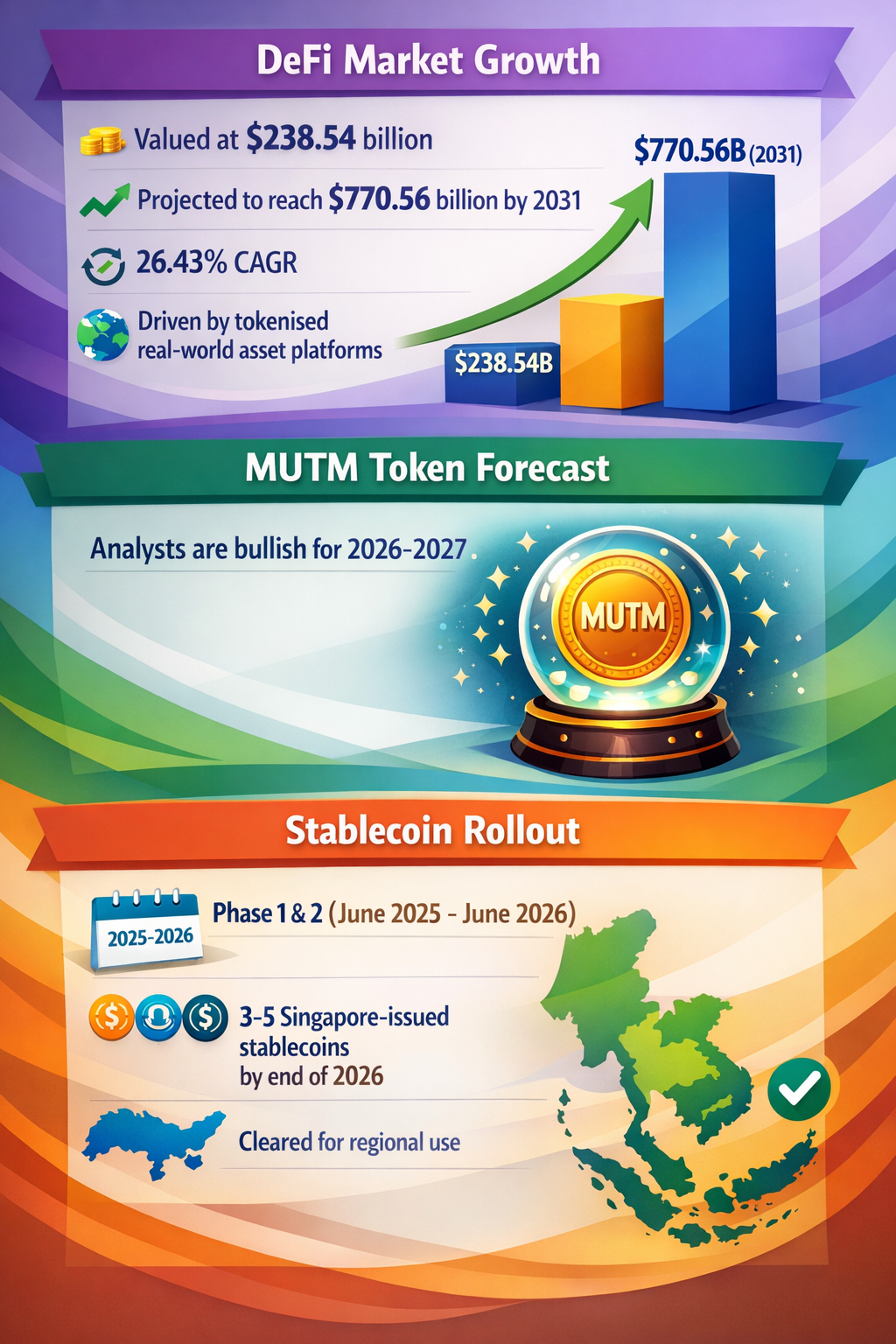
Regulators are increasingly framing stablecoins as financial market infrastructure inseparable from systemic risk management (Stablecoin Insider 2026). The projected tenfold growth of stablecoin issuance to $3 trillion by 2030 (Brookings 20/04/2026) combined with Singapore’s early regional regulatory approvals for stablecoins (Digital in Asia 06/04/2026) means that digital assets will embed themselves within core economic flows, amplifying any underlying infrastructure fragility.
Capital allocation shifts are underway as funds proactively reposition, updating compliance frameworks and digital securities infrastructure to build resilience and capitalize on first-mover advantages (Angel Investors Network 18/03/2026). However, systemic attack pathways also threaten to disrupt these flows by precipitating liquidity withdrawals, loss of confidence, and regulatory clampdowns if breaches persist. The dynamic interplay between cybersecurity risks and evolving regulatory regimes is creating an inflection wherein cybersecurity moves from a cost center to a critical enabler of tokenised finance scalability.
Disruption Pathway
As attack sophistication grows unchecked, market participants and regulators face pressure to escalate controls from patchwork responses to systemic interventions. The conditions accelerating this include expanding interconnectedness of token protocols, cross-chain bridges, and reliance on third-party services, which multiply attack vectors (Business World Online 05/04/2026). Exploits of LayerZero’s decentralized virtual network configuration illustrate how architectural design flaws can amplify damage scope and velocity (Purple-Ops.io 21/04/2026).
This augments stress on current governance and regulatory models that assume cryptographic and protocol resilience as baseline conditions. In response, adaptations may include mandated cybersecurity certifications for DeFi protocols, enforced “kill switches” or circuit breakers in smart contracts, and regulator-imposed centralized oversight layers above decentralized networks. Feedback loops might emerge as regulators impose heavier constraints, which in turn could drive innovation towards more secure but less permissionless architectures. This scenario risks fragmenting the originally open ecosystem, re-consolidating power with entities able to underwrite cybersecurity compliance.
At scale, this disruption could re-engineer industrial structure by bifurcating tokenized finance into ‘trust-but-verify’ sanctioned infrastructure and more experimental but riskier decentralized enclaves. Dominant governance models might shift from pure decentralized autonomous organizations (DAOs) toward hybrid systems incorporating centralized elements to meet evolving regulatory and risk benchmarks, altering strategic positioning for incumbents and new entrants alike.
Why This Matters
This inflection is decision-relevant for senior leaders allocating capital in digital securities, stablecoins, and AI-tokenized assets because cybersecurity risk profiles now directly influence asset credibility, regulatory permissibility, and investor confidence. Funds that fail to incorporate infrastructural cyber-risk assessments may face material losses or regulatory sanctions (Angel Investors Network 18/03/2026). Meanwhile, regulators tailoring stablecoin frameworks as financial market infrastructure elevate supervisory requirements and potential liability for compliance failures (Stablecoin Insider 2026).
Industries reliant on cross-chain tokenized assets must anticipate supply chain risks from third-party protocol providers under cyber siege (Business World Online 05/04/2026). Governance models may have to incorporate real-time threat intelligence and adaptive risk mitigation capabilities, raising operational complexity and costs.
Implications
This signal suggests a plausible structural shift in which cybersecurity resilience becomes foundational to tokenized finance legitimacy, not merely an operational concern. Protocol developers and market participants may be compelled to embed formalized security guarantees and collaborate with regulators to enable compliance at scale. Capital investment may increasingly flow toward protocols with demonstrable adversarial testing and certified security postures.
This should not be conflated with transient hype cycles about individual token performance or incremental security patches. Instead, this constitutes a systemic paradigm where persistent and advanced cyberattacks define the boundary conditions for decentralisation feasibility. Alternative interpretations might argue that technological advances in automated threat detection or cryptography could neutralize risks without altering governance or industry structure; however, current attack trends challenge this optimism.
Early Indicators to Monitor
- Regulatory drafts mandating cybersecurity certification or operational risk disclosures for DeFi and digital securities protocols
- Venture funding clustering around security-first token protocols and blockchain infrastructure firms
- Formation of industry standards for smart contract vulnerability testing and 'kill switch' mechanisms
- Increasing frequency and scale of sophisticated APT exploits in multi-chain token exchanges
- Capital reallocation toward regulated stablecoins over unregulated decentralized stable assets
Disconfirming Signals
- Widespread adoption of quantum-resistant cryptography eliminating protocol vulnerabilities
- Significant reduction in large-scale cyberattacks due to international cyber norms or successful defensive countermeasures
- Regulators adopting a purely laissez-faire posture, refraining from imposing cybersecurity mandates in tokenized finance
- Industry consensus rejecting centralized intervention or hybrid governance adaptations
Strategic Questions
- How can capital deployment strategies incorporate evolving cybersecurity risk profiles in tokenised finance infrastructure?
- What regulatory frameworks and industry standards need to be anticipated to ensure governance resilience amid escalating decentralized finance cyber threats?
Keywords
DeFi Cybersecurity; Stablecoin Regulation; Tokenised Finance; Digital Securities; Blockchain Governance
Bibliography
- DeFi and crypto organizations must now consider North Korean threat actor tradecraft as a baseline risk rather than an outlier, given the Lazarus Group's persistent success at draining wallets and manipulating governance protocols. Tech Maniacs. Published 21/04/2026.
- North Korean TraderTraitor (Lazarus Group) executed a $290 million crypto heist by exploiting a single-DVN configuration in LayerZero to mint fictitious rsETH tokens, showing risks in decentralized finance infrastructure. Purple-Ops.io. Published 21/04/2026.
- The enterprises that benefit most in 2026 will be the ones that treat stablecoins as regulated financial infrastructure and build their controls accordingly. Stablecoin Insider. Published 2026.
- The volume of stablecoins outstanding could grow tenfold to $3 trillion by 2030. Brookings. Published 20/04/2026.
- EMERGING RISKS Across global markets, regulators are increasingly concerned about risks arising from fast-moving technological adoption, the expansion of digital assets, and growing dependence on third-party service providers. Business World Online. Published 05/04/2026.
- Funds that reclassify holdings, update compliance programs, and establish positions in digital securities infrastructure now will benefit from first-mover advantages before institutional allocators flood tokenized markets. Angel Investors Network. Published 18/03/2026.
- The stablecoin framework's Phase 1 and Phase 2 rollouts (June 2025-June 2026) will produce 3-5 Singapore-issued stablecoins cleared for regional use by end of 2026. Digital in Asia. Published 06/04/2026.