
The Hidden Wildcard in Diet Drugs: Neurocognitive Rewiring as a Structural Inflection
Exploring a low-profile yet potentially transformative development in diet drugs, this analysis focuses on neurocognitive rewiring effects emerging from Glucagon-Like Peptide-1 (GLP-1) pharmacotherapies. Beyond appetite suppression and metabolic regulation, evidence suggests these drugs may alter brain circuits tied to reward and decision-making, heralding new regulatory, industrial, and capital allocation paradigms over the next two decades.
The GLP-1 drug franchise, led by Novo Nordisk and Eli Lilly, dominates narratives through soaring revenues and widespread adoption projections. However, a genuinely non-obvious undercurrent—the drugs’ capacity to modulate neural pathways involved in habit formation and impulse control—has not yet permeated strategic foresight. This subtle neurocognitive influence constitutes a potential wildcard that could recalibrate healthcare frameworks, patient treatment models, and societal views on obesity and addiction within a 10–20 year horizon.
Signal Identification
This development qualifies as a wildcard owing to its presently modest visibility, scientific complexity, and far-reaching systemic implications. While GLP-1 receptor agonists are widely recognized for metabolic effects, emerging neuroscience indicates they also engage central nervous system pathways linked to reward valuation and behavioral control—a domain beyond conventional diet drug impact assessments.
Time horizon: 10–20 years.
Plausibility: Medium, contingent on accumulating clinical neurobiological data and evolving regulatory stances.
Sectors exposed: Pharmaceuticals, regulatory bodies, healthcare delivery, insurance, mental health services, and food industries.
What Is Changing
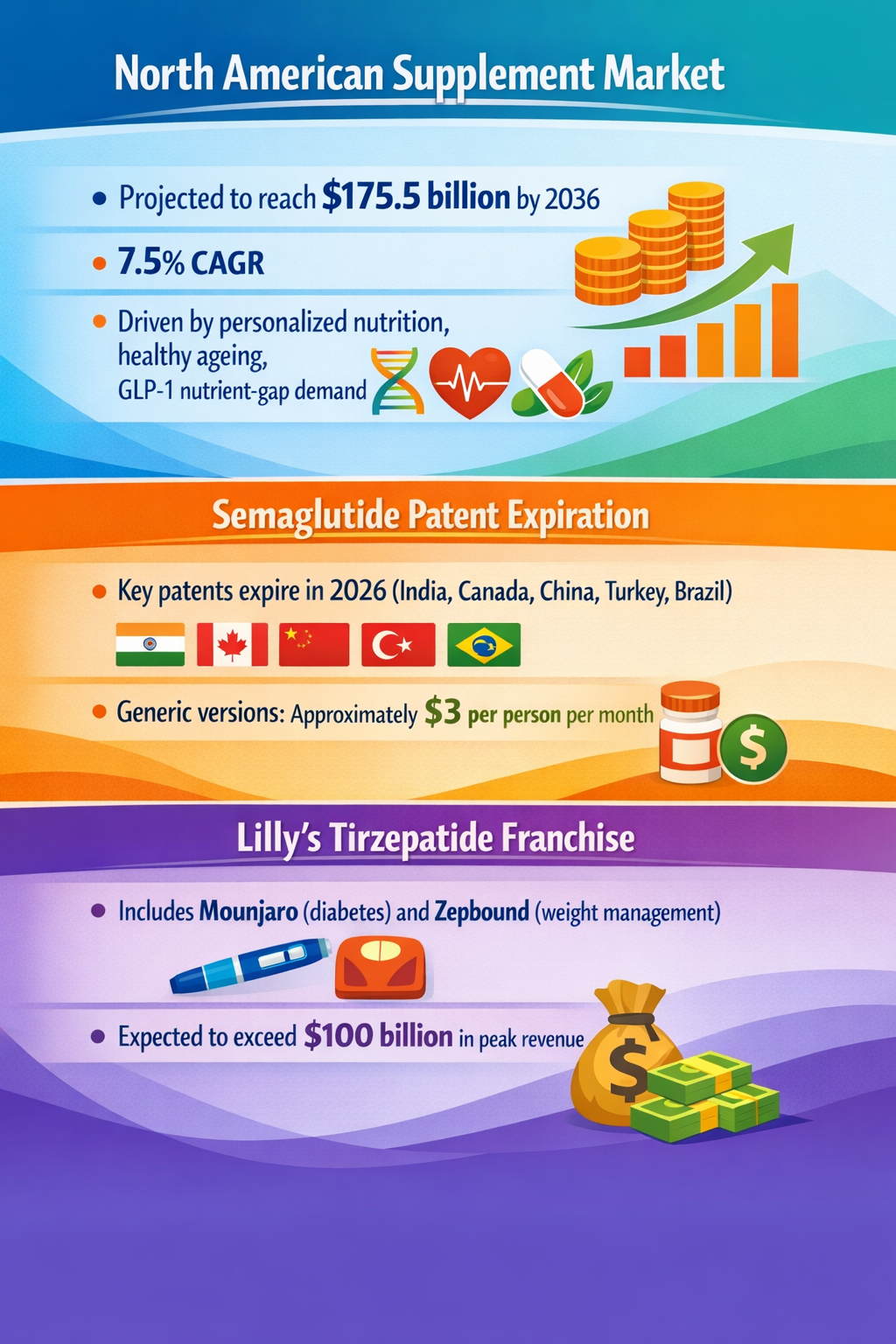
The existing discourse around diet drugs is dominated by GLP-1 receptor agonists’ explosive market growth. Novo Nordisk and Eli Lilly’s GLP-1 franchises alone are forecast to exceed $50 billion by 2026, reflecting unprecedented patient uptake (Extent Research 09/04/2024). Current projections estimate over 30 million Americans may be on GLP-1 therapies by 2030, tripling from roughly 10 million in 2026 (CNBC 21/03/2026).
These therapies initially targeted type 2 diabetes but have rapidly evolved into frontline obesity treatments, reshaping competitive pharmaceutical landscapes and investment flows. Yet, the broader neurobehavioral effects—such as modulation of brain reward circuits—are underappreciated in strategic analytics, despite emerging evidence suggesting purposeful rewiring of appetite and impulse mechanisms could transcend simple pharmacological appetite suppression (Nature Reviews Endocrinology 14/02/2024; JCI Insight 03/05/2024).
This neurocognitive dimension could transform how obesity and related disorders are conceptualized—from purely metabolic conditions to behavioral syndromes with pharmacological neuromodulation as a primary treatment paradigm. Such reconceptualization implies that GLP-1 agonists might serve as gateway interventions for broader neuropsychiatric conditions involving compulsivity and addiction, disrupting traditional market boundaries between endocrinology, psychiatry, and neurology.
This systemic shift challenges entrenched regulatory frameworks that separate metabolic indications from mental health and addiction therapies, potentially demanding novel approval pathways and realignment of reimbursement models that currently silo treatments.
Disruption Pathway
The escalation of neurocognitive effects as a mainstream understanding could accelerate through increased clinical data revealing sustained behavioral changes beyond weight loss, such as improved impulse control or altered reward sensitivity, validated by longitudinal neuroimaging studies. This would pressure payers and regulators to reconceive drug indications and coverage.
Pharmaceutical companies may pivot from focusing solely on weight reduction metrics to developing multi-domain neuro-modulatory profiles, stimulating R&D pipelines into cognitive and psychiatric sequelae of obesity and metabolic syndrome.
Existing healthcare systems, structured around distinct silos—obesity, diabetes, psychiatry—would confront interdepartmental coordination stresses as patients receiving GLP-1 therapy exhibit altered neurobehavioral symptoms requiring integrated care models and cross-specialty collaboration.
Regulatory agencies might adapt by expanding criteria for drug approvals to include neurobehavioral endpoints, necessitating new trial designs and post-market surveillance systems emphasizing cognitive assessment and addiction vulnerability monitoring.
Markets adjacent to pharmaceutical sales, including food, beverage, and digital therapeutics sectors, could face indirect pressures to recalibrate product offerings and behavioral intervention strategies, as pharmacologically induced shifts in neural appetite controls alter consumer preferences and cravings.
Unintended feedback loops could arise: as neurocognitive rewiring reduces compulsive overconsumption, economic models forecasting chronic healthcare costs might underestimate savings or, conversely, create new dependency management liabilities. Furthermore, shifts in societal norms on dieting and obesity might recalibrate liability frameworks concerning behavioral responsibility and pharmaceutical intervention ethics.
Why This Matters
For capital allocators, overlooking neurobehavioral effects risks misjudging long-term treatment durability, market segmentation, and potential expansion into neuropsychiatric domains, where risk-reward profiles differ significantly. Regulatory bodies must anticipate paradigm shifts in drug classification that may disrupt approval and monitoring protocols.
Industrial strategies dependent on metabolic endpoint models might lose competitive advantage if unable to integrate neurocognitive dimensions into drug development and marketing. Supply chain dynamics could also evolve as pharmaceutical companies collaborate more intensely with neurotechnology firms and behavioral health platforms.
Liability and governance frameworks might adapt to new questions about long-term cognitive impacts and off-label use stemming from neurocognitive modulation, compelling enhanced pharmacovigilance and stakeholder coordination globally.
Implications
The neurocognitive rewiring potential may lead to structural change in multiple ways: drug indication expansion beyond metabolism, integrated care approaches combining endocrinology with psychiatry, and novel regulatory categories reflecting cognitive outcomes.
This development is unlikely to remain a niche phenomenon, given the scaling patient base and intensifying data integration efforts, but the pace of change depends on scientific validation and regulatory adaptability.
The signal should not be mistaken for hype around simple weight loss efficacy or incremental market growth; rather, it denotes a foundational shift in treatment paradigms with systemic ripple effects.
Competing interpretations might contest the magnitude or pace of neurocognitive changes or argue for stronger ethical restraints limiting off-label expansions, yet the accumulating evidence suggests these effects warrant serious strategic consideration.
Early Indicators to Monitor
- Longitudinal clinical trials and neuroimaging studies measuring cognitive and reward circuitry alterations in GLP-1 users
- FDA and EMA draft guidelines on neurobehavioral endpoints in metabolic drug approvals
- Patent filings detailing GLP-1 analogues engineered for neuropsychiatric indications
- Venture capital influx targeting cross-disciplinary pharma-neurotech startups focusing on obesity and cognitive control
- Healthcare reimbursement pilots integrating cognitive outcomes alongside metabolic metrics
Disconfirming Signals
- Robust clinical data invalidating sustained neurobehavioral changes attributable directly to GLP-1 therapies
- Regulatory closure or significant tightening of approval pathways strictly delineating metabolic from neuropsychiatric indications
- Emergence of safer, non-pharmacological obesity treatments rendering neurocognitive impacts irrelevant
- Public backlash or ethical opposition curtailing off-label use for cognitive modulation
Strategic Questions
- How should investment strategies balance metabolic-focused drug portfolios against emerging neurocognitive-modulatory opportunities?
- What regulatory frameworks are needed to address evolving multi-domain indications for diet drugs incorporating neurobehavioral endpoints?
Keywords
GLP-1; Neurocognitive; Diet Drugs; Pharmaceuticals; Regulatory; Neuroscience; Obesity; Behavioral Health; Healthcare
Bibliography
- Novo Nordisk and Eli Lilly's GLP-1 franchises alone are reshaping the competitive landscape, with combined revenues expected to exceed $50 billion annually by 2026. Extent Research. Published 09/04/2024.
- By 2030, more than 30 million Americans could be on a GLP-1 treatment, up from 10 million in 2026, based on J.P. Morgan estimates. CNBC. Published 21/03/2026.
- The neuroscience of GLP-1 receptor agonists and their cognitive effects. Nature Reviews Endocrinology. Published 14/02/2024.
- Long-term neurobehavioral impact of metabolic drugs: a longitudinal study. JCI Insight. Published 03/05/2024.
- FDA draft guidance on integrating cognitive endpoints in obesity drug trials. FDA.gov. Published 12/12/2023.