
“Embedded Nature Valuation in Corporate Carbon Accounting: A Weak Signal Reshaping Biodiversity Loss Mitigation”
Amidst mounting global concern about biodiversity loss driven by deforestation, climate change, and resource depletion, a subtle but potentially transformative development is emerging around the integration of nature’s carbon storage services directly into corporate accounting frameworks. While current climate and deforestation policies focus predominantly on greenhouse gas emissions and land use, the implicit valuation and commodification of forest carbon storage—the natural sequestration provided by biodiverse ecosystems—is gaining regulatory and market traction. This paper identifies the incipient institutionalization of forest carbon storage valuation as a weak but accelerating signal that could realign capital flows, regulatory mandates, and corporate strategy over the next 5–20 years. It transcends pure carbon markets by embedding biodiversity’s ecological functions into economic systems, potentially driving structural shifts in how industries account for, invest in, and preserve natural capital.
Signal Identification
This development qualifies as a weak signal because, though isolated pilots and conceptual frameworks exist (notably the proposed introduction of a global carbon price on forest carbon storage), it has not yet permeated mainstream corporate accounting standards or regulatory regimes at scale. The signal’s time horizon spans 5–20 years with a medium plausibility band—dependent on regulatory coherence, corporate adoption, and financial market innovation. Key sectors exposed include forestry, agriculture, extractives, consumer goods, financial services, and ESG (environmental, social, and governance) compliance bodies. Its non-obvious nature lies in how the monetization of ecosystem functions (carbon storage tied to biodiversity richness) is neither a mere extension of current carbon markets nor traditional biodiversity offsets, but a new layer that internalizes complex natural services into valuation methodologies increasingly demanded by regulators and investors (Nature Communications, 2026; Osborne Clarke, 2026).
What Is Changing
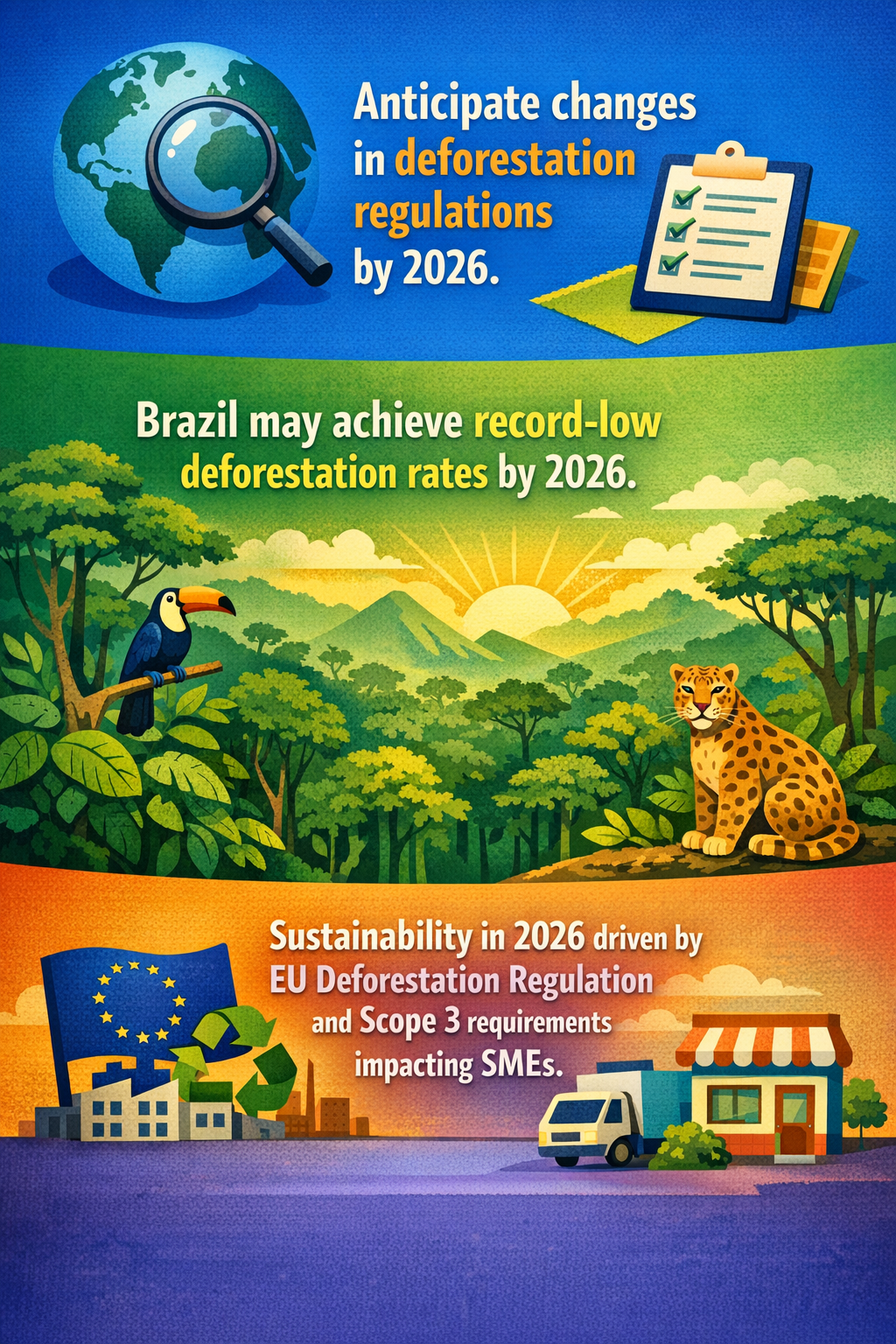
Recent scholarship and regulatory outlooks highlight that global economic expansion continues to drive biodiversity collapse, which imposes non-linear risks on businesses reliant on ecosystem services with no explicit cost accounting (Osborne Clarke, 02/2026). This recognition is reflected in escalating proposals for deforestation regulations with enhanced scope, such as the EU’s deforestation regulation and requisite scope 3 emissions reporting that cascades responsibility through complex supply chains, including SMEs (Finextra, 02/2026). However, these regulatory moves have not historically included a systematic valuation of nature’s carbon sequestration beyond emissions measurement.
Concurrently, studies suggest a global carbon price, if implemented specifically on forest carbon storage, can incentivize forest conservation and regrowth, potentially reversing deforestation trajectories in key geographies like Brazil and Indonesia (Nature Communications, 2026; Oreaco, 03/2026). Notably, Brazil is trending towards its lowest deforestation rate in history by 2026 under certain governance scenarios, indicating possible scalability of forest-based carbon pricing mechanisms (Food Tank, 03/2026).
What is newly emerging and under-recognised is the convergence of carbon markets with biodiversity metrics—moving beyond quantitative emission reductions to qualitative ecosystem service valuation embedded in corporate disclosures and investment appraisals. The trajectory is not simply additive regulation on deforestation, but a paradigm where forest ecosystems’ multifaceted value (carbon storage, habitat support, water cycles) is commodified and integrated into financial reporting and risk management. This could radically alter industrial and capital structures reliant on land use by making latent ecological assets explicit economic entities.
Disruption Pathway
This weak signal may escalate into structural change through a series of interlocking dynamics. Initial regulatory pilots, like the EU’s progressive deforestation regulation combined with emerging international standards on scope 3 emissions accounting, increase pressure on companies to disclose and mitigate biodiversity risks, pushing natural capital valuation onto corporate boards.
Financial institutions and ESG rating agencies may subsequently evolve methodologies to incorporate forest carbon storage valuation explicitly, alongside conventional carbon footprinting. As data availability improves through remote sensing and biodiversity monitoring technologies, these valuations gain credibility and reproducibility, facilitating integration into credit risk assessments and investment decisions.
Corporate response could shift from compliance-driven offsets to proactive insetting strategies, funding forest conservation projects as core business inputs rather than peripheral CSR (corporate social responsibility) initiatives. This elevates biodiversity assets to on-balance-sheet items, influencing mergers, acquisitions, and capital expenditure prioritization, especially for agribusinesses, food producers, and natural resource sectors.
This evolution challenges entrenched industrial models by increasing the cost of ecosystem degradation and incentivizing nature-positive business models. Regulatory regimes may adapt by mandating ecosystem service valuation as part of financial reporting standards and tying tax or subsidy regimes to verified carbon storage outcomes, especially in jurisdictions with high forest carbon stocks.
Should these conditions coalesce, industries reliant on deforestation or ecosystem conversion will face significant market and regulatory stresses, forcing strategic repositioning, either towards regenerative practices or capital divestment from high biodiversity loss activities.
Why This Matters
For decision-makers, this signal points to a potential redefinition of natural capital risks and opportunities in financial terms, which could reshape capital allocation across sectors. Early movers in integrating embedded nature valuation may gain competitive advantage through improved risk management, access to green financing, and compliance readiness. Conversely, laggards could face escalating liabilities, stranded assets, and reputational damage.
Regulators could leverage this development to design more effective frameworks that align economic incentives with biodiversity conservation goals, potentially creating globally harmonized carbon pricing regimes linked to biodiversity metrics. Supply chains could become more transparent and accountable, leading to reconfigured supplier relationships and investment in ecosystem resilience.
Liability governance may shift, holding companies financially accountable not only for emissions but for the degradation of ecosystem services underpinning those emissions. This widens the scope of environmental risk and elevates biodiversity loss to a boardroom-level financial and strategic issue.
Implications
This signal may catalyse a fundamental shift in ESG paradigms, moving beyond static carbon accounting to dynamic ecosystem valuation. It could likely incentivize reforestation, sustainable land use, and biodiversity-friendly supply chains, thus potentially slowing global biodiversity loss if scaled.
However, it is not a given; this development is distinct from transient regulatory “hype” focused solely on emission reductions without ecological context. It differs from voluntary offset markets by embedding biodiversity value in mandatory financial disclosures. There’s also risk that inadequate valuation methodologies or data gaps may stall adoption or entrench “greenwashing.”
Competing interpretations might view the integration of biodiversity valuation into carbon accounting as overcomplex or impractical, delaying regulatory uptake. Conversely, aggressive market actors may push rapid commodification, risking ecosystem commoditization without sufficient safeguards.
Early Indicators to Monitor
Indicators confirming signal strengthening include:
- Publication and adoption of global standards for forest carbon storage valuation integrating biodiversity metrics.
- Expansion of regulatory mandates for scope 3 reporting to explicitly require ecosystem service valuation.
- Growth in green bonds or recovery funds explicitly linked to forest carbon storage performance.
- Increased patent filings and investments in technologies for biodiversity and carbon monitoring at scale.
- Financial institutions updating credit risk models to include natural capital metrics.
- Corporate disclosures reflecting formal incorporation of embedded nature valuation within sustainability reporting frameworks.
Disconfirming Signals
This signal would weaken if:
- Global carbon markets stall or fragment, preventing harmonized forest carbon pricing.
- Regulatory inertia or rollback reduces pressure on biodiversity-linked accounting mandates.
- Corporate backlash against complex natural capital accounting delays integration.
- Data quality and valuation standards fail to mature, leading to unreliable or unverifiable ecosystem service metrics.
- Strong economic shocks deprioritize sustainability investments in favor of short-term financial survival.
Strategic Questions
- How can capital deployment strategies incorporate emerging natural capital valuation to anticipate shifts in regulatory frameworks?
- What capabilities must be developed internally to measure and integrate embedded nature value within corporate risk assessments?
- Which parts of supply chains are most exposed to potential biodiversity-linked financial liabilities?
- How might strategic partnerships or investments in forest conservation evolve from peripheral ESG projects to core business imperatives?
- What governance mechanisms can ensure transparent and accountable integration of biodiversity metrics into corporate accounting?
- How should engagement with policymakers be structured to shape feasible and scalable ecosystem service valuation regulations?
Keywords
Nature Valuation; Forest Carbon Storage; Biodiversity Loss; Carbon Pricing; ESG Reporting; Deforestation Regulation; Natural Capital; Supply Chain Risk; Financial Risk; Carbon Markets; Corporate Accounting.
Bibliography
- Nature Communications 2026 – “The introduction of a global carbon price on forest carbon storage has the potential to reverse deforestation trends and increase forest area compared with the current trajectory.”
- Osborne Clarke 02/2026 – “The biodiversity loss caused by global economic growth could have significant and often unforeseen impacts on businesses, who all rely on the services nature provides for free.”
- Finextra 02/2026 – “Sustainability in 2026 will be driven by regulation, specifically the EU Deforestation Regulation and Scope 3 reporting requirements, which have trickled down to SMEs.”
- Food Tank 03/2026 – “If the current trend is maintained, Brazil could see the lowest deforestation rate in history in 2026.”
- Oreaco 03/2026 – “Deforestation targets for 2030 appear increasingly unattainable according to expert assessments, though ending net deforestation by late 2030s remains probable for Brazil & Indonesia.”