
The Emerging Role of Supply Chain Traceability in Halting Global Biodiversity Loss
Global efforts to reduce biodiversity loss have long emphasized habitat protection, climate change mitigation, and limiting overexploitation of species. However, an underappreciated weak signal gaining momentum lies in the increasing use of advanced supply chain traceability systems tied to deforestation-sensitive commodities, such as cattle, soy, palm oil, and timber. This development spans technologies, policy frameworks, and market pressures, creating a potent disruptor with the potential to reshape industries and conservation strategies alike in the next decade.
What’s Changing?
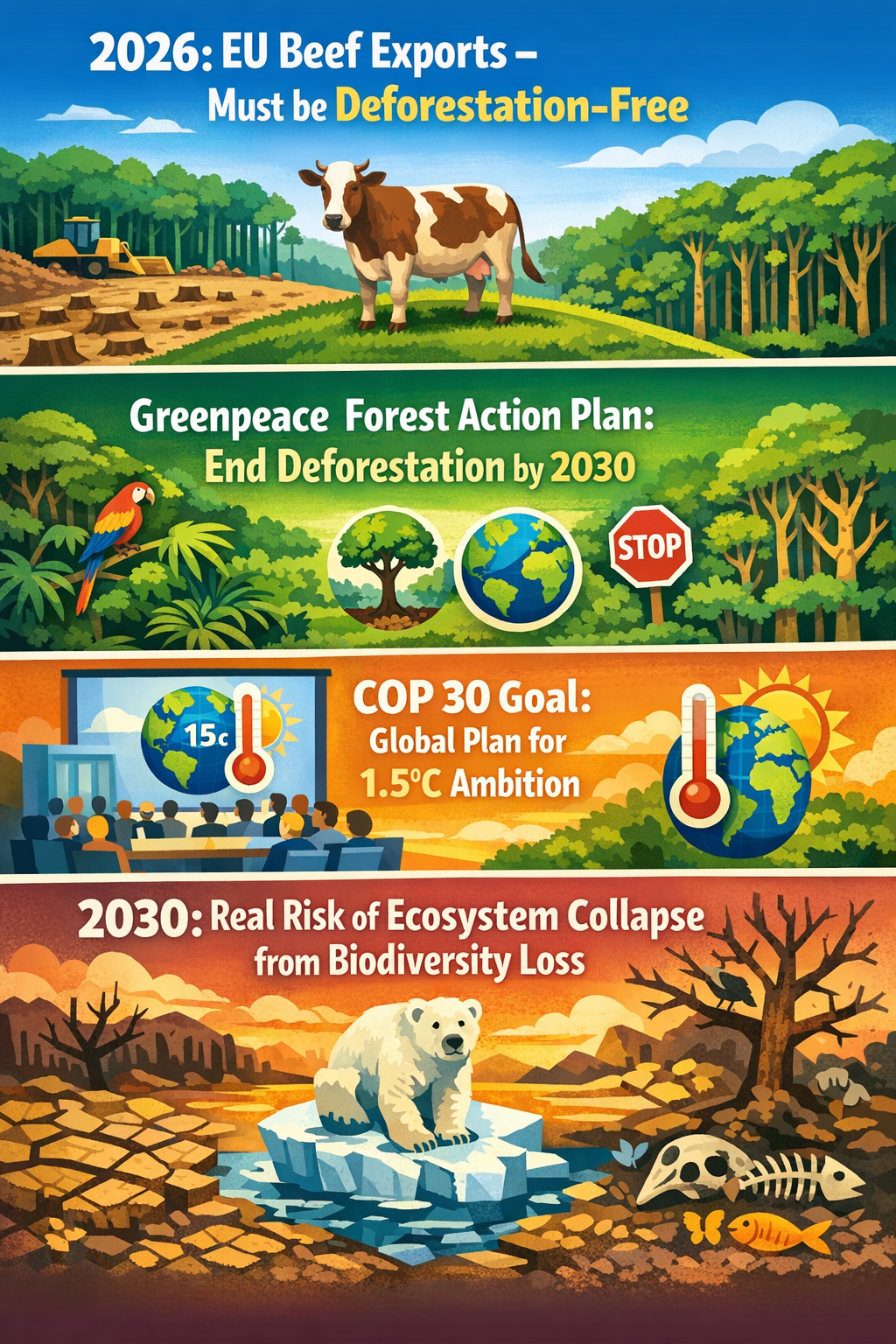
Rapidly evolving regulatory frameworks in major markets are beginning to demand rigorous proof that commodities, especially from livestock supply chains, are free of links to deforestation. Notably, the European Union plans to require, by 2026, that beef imports, including from cull cows, demonstrate such traceability (All About Feed). This signals a shift in compliance expectations that will likely ripple through global cattle industries.
In response, national governments in producer countries are deploying traceability systems to meet import market demands and increase supply chain accountability. Brazil’s rollout of a cattle traceability framework exemplifies this shift, combining technology and governance to track livestock movements and verify compliance with environmental standards (Forest Declaration).
Financial institutions and investors are also backing sustainability-driven transparency. Bank of America disclosed enhanced standards for high-risk sectors—such as cattle, soy, palm oil, and forestry—after shareholder engagement and pressure from sustainability advocates (Green Century). These developments indicate that capital allocation increasingly depends on verifiable environmental performance.
Simultaneously, global biodiversity conservation frameworks acknowledge ecosystem collapse threats driven by land-use change and deforestation. Recent studies highlight the interconnected risks of habitat loss, livestock farming expansion, and urbanization on species extinction, particularly in regions like Northern San Jose, Costa Rica (IUCN), while climate crises exacerbate ecosystem vulnerabilities (Climate Matters).
These combined policy, financial, and environmental pressures create novel incentives for broad adoption of traceability technology and integrated environmental risk management at scale. Technology advances in blockchain, Internet of Things (IoT) sensors, and satellite monitoring enhance the feasibility and credibility of such traceability efforts, enabling granular tracking from farm to market.
Why is this Important?
This emergence could recalibrate how industries, governments, and conservationists address biodiversity loss. Supply chain traceability functions as a lever to mitigate overexploitation and habitat degradation by attaching accountability mechanisms directly to commodity production processes.
By requiring verified deforestation-free supply chains, markets may compel producers to change land use practices more effectively than traditional conservation policies that primarily rely on protected area designation or punitive restrictions. As seen in Brazil’s traceability efforts, this approach has the potential to align economic incentives with ecosystem stewardship while preserving market access (Forest Declaration).
For governments, traceability systems offer a pathway to operationalize international commitments like the Kunming-Montreal Global Biodiversity Framework by embedding environmental criteria into transnational trade flows (LSE Grantham Institute).
From a security perspective, the United Kingdom recognizes biodiversity loss and ecosystem collapse as national security risks, underscoring the urgency of innovative interventions (The Cooldown). Traceability could prove central to managing these threats by ensuring supply chain transparency and minimizing illegal or unsustainable practices that contribute to ecological decline.
Financial markets may increasingly value corporations that provide transparent, credible evidence of sustainable practices, reshaping investment flows and corporate strategy in agriculture, forestry, and commodity trading sectors. This could lead to enhanced risk mitigation and opportunities for early movers who invest in traceability infrastructure.
Implications
The growing emphasis on supply chain traceability tied to biodiversity outcomes may catalyze several significant shifts:
- Industry Transformation: Producers and exporters may need to overhaul operational systems to incorporate digital traceability tools, real-time monitoring, and third-party verification to meet compliance and market demands.
- Technology Integration: Adoption of IoT devices, blockchain, satellite imagery, and AI for supply chain management will become strategic assets, potentially driving a new wave of agritech and environmental fintech innovation.
- Policy Innovation: Governments might harmonize standards for traceability and environmental disclosure, enhancing cross-border cooperation while negotiating the balance between trade facilitation and environmental protection.
- Investment Shift: Environmental, social, and governance (ESG) criteria will likely expand to incorporate supply chain transparency metrics focused on biodiversity, influencing portfolio risks and capital distribution.
- Reduced Deforestation & Habitat Loss: Increased accountability may slow deforestation linked to commodities, especially cattle ranching and soy agriculture, by creating market penalties for noncompliance, which could help preserve ecosystems and species.
- New Competitive Dynamics: Early adopters of robust traceability could gain first-mover advantages, including premium market access and consumer trust, compelling laggards to follow, thereby accelerating sector-wide change.
- Data Governance Challenges: There will be rising concerns around data sovereignty, privacy, and the integrity of traceability systems, necessitating robust governance frameworks and stakeholder transparency.
However, challenges remain. Smallholder producers may struggle with the cost and complexity of technology adoption unless supported by governments, NGOs, or private sector collaborations. The effectiveness of traceability systems in stopping ecosystem collapse also hinges on enforcement rigor and international cooperation.
Questions
- How can industries develop interoperable, cost-effective traceability systems that encompass complex supply chains without excluding small producers?
- What regulatory frameworks and international agreements could incentivize or mandate traceability to ensure credible, verifiable environmental claims?
- How might emerging data technologies be leveraged or regulated to balance transparency with producers’ privacy and sovereignty concerns?
- What role can financial institutions play in tying access to capital or insurance to verified biodiversity-responsible supply chains?
- How should governments and multilateral bodies integrate traceability into broader biodiversity loss mitigation strategies and national security risk planning?
- Which sectors beyond agriculture and forestry might see disruptive impacts from similar traceability and accountability demands?
- How will consumers’ increasing demand for deforestation-free products influence corporate strategy and market competition?
Keywords
supply chain traceability; biodiversity loss; deforestation; cattle industry; blockchain technology; environmental governance; ESG; deforestation regulations
Bibliography
- Protecting species in the changing landscape: New study maps key threats in northern San Jose. IUCN. https://iucn.org/news/202602/protecting-species-changing-landscape-new-study-maps-key-threats-northern-san-jose
- Accurate feed data unlocks carbon savings for UK dairy farms. All About Feed. https://www.allaboutfeed.net/market/feed-statistics/accurate-feed-data-unlocks-carbon-savings-for-uk-dairy-farms/
- Brazil rolls out cattle traceability to support supply-chain accountability. Forest Declaration. https://forestdeclaration.org/press-release-forest-pledges-2025/
- Bank of America strengthens forest protections after engagement with Green Century. Green Century. https://www.greencentury.com/statement-bank-of-america-strengthens-forest-protections-after-engagement-with-green-century/
- Environmental risks dominate long-term outlook: WEF Global Risks Report 2026. Climate Matters. https://climatematters.earth/wef-the-global-risks-report-2026/
- China’s role in implementing the Kunming-Montreal Global Biodiversity Framework. LSE Grantham Institute. https://www.lse.ac.uk/granthaminstitute/publication/chinas-role-in-implementing-the-kunming-montreal-global-biodiversity-framework/
- Biodiversity loss poses national security risk in the UK. The Cooldown. https://www.thecooldown.com/outdoors/biodiversity-loss-uk-national-security-report/