
Indonesia’s Strategic Role in Shaping a Multipolar World: A Weak Signal Emerging as Global Disruption
The geopolitical landscape is evolving beyond the binary rivalry of the United States and China, moving toward a more complex multipolar order. Amid this shift, Indonesia’s entry into the BRICS grouping—an alliance including Brazil, Russia, India, China, and South Africa—emerges as a notable weak signal of change that could reshape global governance, trade, and economic balances. This development, still underappreciated, suggests Indonesia may play a pivotal role in redefining political and economic alliances, disrupting current global hierarchies, and influencing technology and financial flows over the next one to two decades.
What’s Changing?
Indonesia’s accession to BRICS represents a strategic recalibration of its international positioning. Traditionally regarded primarily as a pivotal Southeast Asian economy, Indonesia is now poised to elevate its influence among major nations of the Global South. This move situates Indonesia within efforts toward a more “inclusive, equitable and balanced multipolar world order” (Jakarta Post). Indonesia’s participation aligns with broader geopolitical realignments marked by:
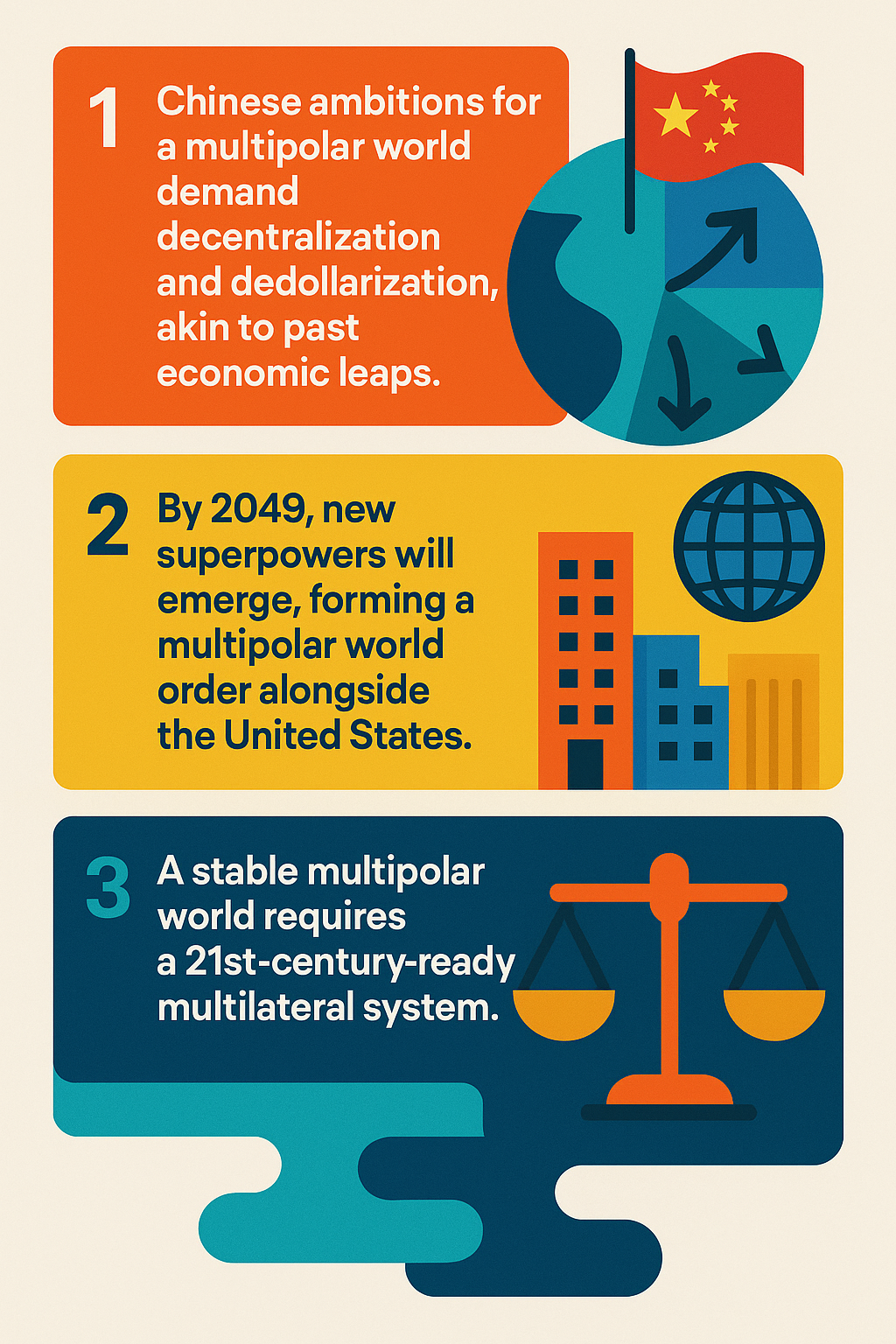
- Decentralization and dedollarization pressures, driven by Chinese ambitions to supersede US-dominated economic systems (Newsweek)
- The escalating US-China rivalry focusing on technology leadership and trade influence, with implications for smaller players balancing their allegiances and economic interests (Chandan)
- Indonesia’s balancing act between leveraging economic opportunities and navigating the geopolitical risks inherent to BRICS membership (Eurasia Review)
- The broader phenomenon of interconnected geopolitical crises affecting market sentiments and requiring nuanced strategy across multiple ecosystems (The Pilot News)
Indonesia’s involvement in BRICS is more than symbolic. It attempts to influence the multipolar world-system’s trajectory, amidst China’s surge as an economic superpower and its push for alternative financial instruments such as regional digital currencies, which may challenge US monetary dominance (World Coin Index). Indonesia could act as a critical bridge and balancing force within this reconfiguration, leveraging its demographic strengths and growing economy.
Furthermore, Indonesia embodies emerging demographic and lifestyle shifts that major economies must reckon with. Its youthful population and expanding middle class could become influential in shaping consumption, innovation, and technological adoption trends across Asia Pacific and the broader Global South (Janus Henderson).
Why is this Important?
The evolution toward a multipolar world challenges longstanding US and Western economic and political dominance. Indonesia’s entry into this sphere might not only shift diplomatic dynamics but also introduce new governance models, economic partnerships, and technological standards. This could impact trade routes, international law, and global financial architecture by adding a nuanced voice from a developing, yet increasingly influential, economy.
This weak signal should interest industries and governments because it reveals a possible move away from binary confrontations, such as the US-China standoff, toward fluid, multilateral engagements. For businesses, this shift might mean:
- Recalibrated supply chains that factor in new economic blocs and regional cooperation agreements
- Opportunities for innovation partnerships and investment in infrastructure projects driven by BRICS objectives
- Changes in regulatory environments influenced by Indonesian perspectives, particularly regarding digital economies and environmental standards
- Increased geopolitical risk diversification as emerging powers gain voice
Governments might need to reconsider strategic partnerships, defense postures, and diplomatic relations, recognizing Indonesia as more than a regional actor but a potential global balancer. This aligns with hypotheses that a multipolar system “may” require nations like the US to adopt new strategies to remain competitive and secure influence (Foreign Affairs).
Implications
Recognizing Indonesia’s emerging role provides actionable insight for various stakeholders:
- Policy Makers: Developing mid- and long-term strategies that engage Indonesia in economic, security, and technological cooperation could yield enhanced regional stability and access to emerging markets.
- Investors and Corporations: Early engagement with Indonesian markets and participation in BRICS-driven projects could present growth avenues and risk hedging in uncertain geopolitical environments.
- Technology Sector: Monitoring Indonesia’s stance on digital currencies, data governance, and innovation policies may reveal shifts in global tech standards and interoperability expectations.
- Financial Institutions: Preparing for alternatives to the US dollar in trade financing, especially as Indonesia pushes for dedollarization aligned with BRICS, could mitigate future exposure to currency volatility.
More broadly, this weak signal points to potential cascading effects in global governance frameworks, particularly if Indonesia promotes more decentralized international institutions or champions Global South coordination. It may also encourage other middle powers and emerging economies to seek similar strategic realignments, thus fragmenting or reconfiguring existing blocs.
Such moves carry risks, including increased geopolitical competition and uncertainty for supply chains, but also opportunities for inclusive growth models and diversified global partnerships that better reflect current economic realities.
Questions
- How might Indonesia’s BRICS membership transform trade and investment flows in Southeast Asia and beyond?
- What role could Indonesia play in counterbalancing existing US-China tensions without escalating rivalry?
- How will Indonesia’s demographic and technological policies influence BRICS agendas on innovation and digital currency initiatives?
- What geopolitical risks and opportunities does Indonesia’s new role introduce for businesses seeking supply chain resilience?
- How should governments recalibrate foreign policy and economic strategies to accommodate Indonesia’s ascent in multipolar arrangements?
- What governance innovations might Indonesia champion that could reshape global legal and financial systems?
Keywords
Indonesia BRICS; multipolar world; dedollarization; geopolitical realignment; Global South; digital currency; supply chain resilience; emerging markets
Bibliography
- Indonesia will now be part of the major political forces of the Global South in its quest for a more inclusive, equitable and balanced multipolar world order. Jakarta Post
- Ultimately, Indonesia's participation in BRICS could enhance its position in a multipolar world, provided that it effectively navigates the challenges of alignment and cooperation. Eurasia Review
- Chinese ambitions of creating a multipolar world order will demand decentralization and dedollarization, and both may require the type of blistering progress that saw China leapfrog Germany and Japan to become the world's No. 2 economy in the previous decade. Newsweek
- The US-China rivalry in technology and influence will likely continue to see-saw. Chandan
- The current environment is characterized by interconnected risks, where conflicts in Ukraine and the Middle East, along with the US-China rivalry, are not isolated but rather amplify each other, creating cascading effects. The Pilot News
- To successfully compete in a multipolar world, the United States will need to shift its strategy. Foreign Affairs
- A Strategic Bitcoin Reserve, for instance, could be framed as a patriotic counterweight to China's digital yuan ambitions, reinforcing U.S. economic sovereignty in a multipolar world. World Coin Index
- Three macro drivers will shape markets: Geopolitical realignment, demographic and lifestyle shifts, and the higher cost of capital. Janus Henderson