
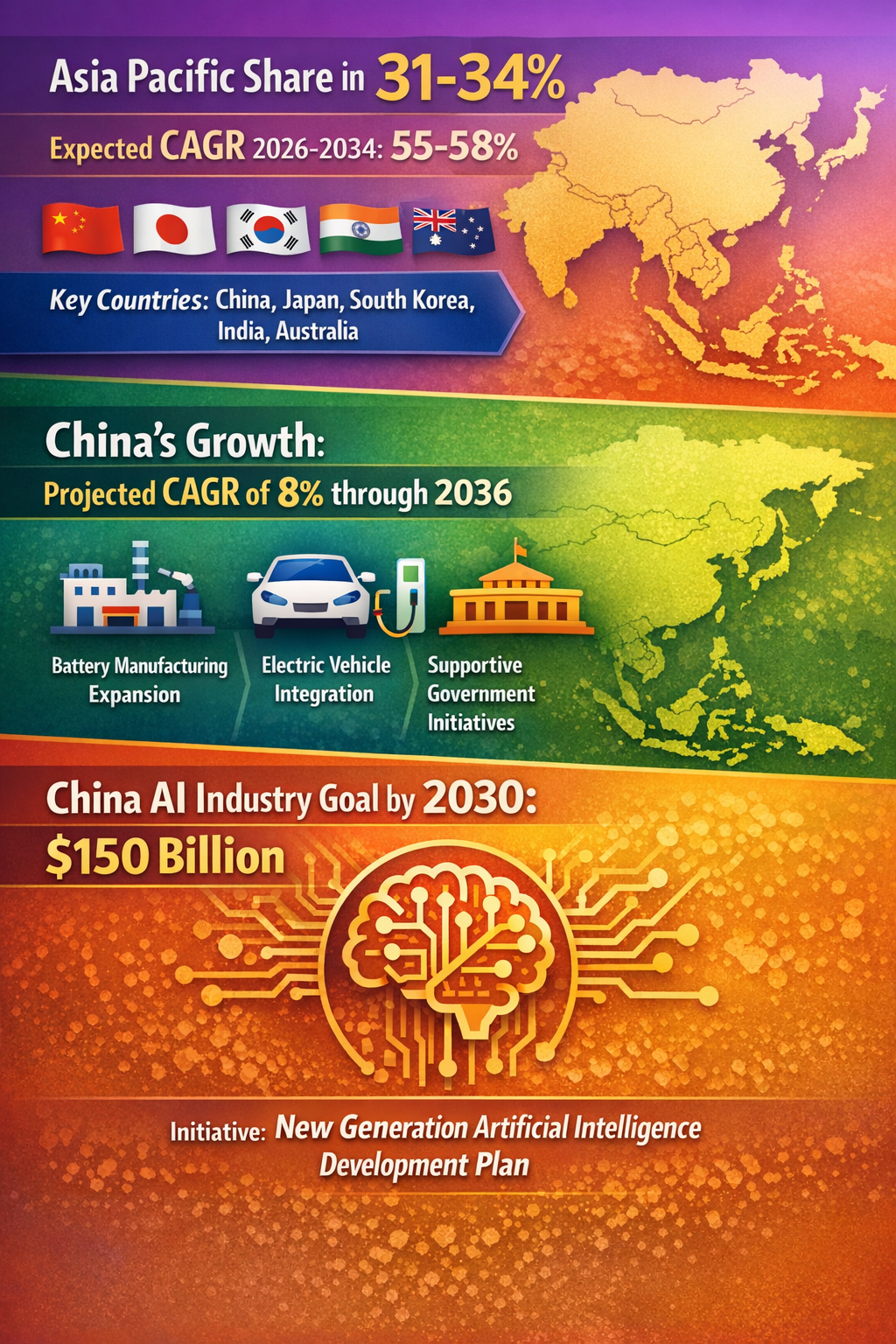
The current landscape of weak signals in China reveals an emergent, fragmented undercurrent of technological acceleration intertwined with governance tightening and strategic industrial pivoting. While headline growth trends—such as AI industry scale-up, battery manufacturing expansion, and 6G development—remain robust and expected, nascent indicators point toward novel modes of R&D intensity, ethical governance regimes in technology, and boundary-pushing robotics applications under stress conditions. These low-visibility signals challenge assumptions about linear technology adoption and regulatory permissiveness, hinting at possible systemic discontinuities. The evolving landscape is marked by a tension between rapid capability building and layered ethical constriction, creating zones of uncertainty where currently marginal developments could yield outsized disruption or opportunity. Decision-makers should watch these undercurrents carefully, avoiding overreliance on dominant trend extrapolation and preparing for emergent discontinuities tied to technology governance, AI applications, and advanced robotics.
| Weak Signal Name | Description | Visibility / Maturity | Direction of Travel | Why it Matters |
|---|---|---|---|---|
| Intensified Multi-tiered Tech Ethics Governance | China’s establishment of a national-provincial-regional three-tier ethical review system for technology indicates a nascent institutionalization of ethical oversight focused on emerging technologies. |
Fragmented, policy-exclusive niche; early implementation stages | Emerging – gaining gradual policy reinforcement and broader institutional attention | Challenges assumptions of unfettered tech development; could shape innovation trajectories through new bureaucratic constraints and introduce strategic governance friction. |
| Robotics R&D under High-Stress Conditions | Experimentation with forcing humanoid robots to operate under unpredictable, high-stress scenarios is compressing developmental cycles and testing real-world utility beyond demonstration settings. | Niche industry experiments with isolated adopters; early-stage prototypes and trials | Emerging – gradual intensification with new research groups participating | May signal a leap in robotics reliability and application in risk-prone domains, potentially disrupting labour markets and automation expectations faster than anticipated. |
| AI Industry Scale and Ambition | China’s plan to build an AI industry valued at $150 billion by 2030 reflects official prioritization backed by significant state resource allocation. | Moderately visible, policy-driven but early in full-scale realization | Emerging, with steady growth anticipated | Sets a macro-trajectory but may conceal micro-level innovation tensions or shifts, especially given regulatory and ethics overlay. |
| 6G Development and Regional Tech Networks | Asia-Pacific's aggressive 6G market growth driven by China among others involves dense manufacturing and policy-backed R&D networks. | Emerging market and R&D scale-up; moderately fragmented across stakeholders | Emerging, rapid expansion in technological capabilities | Possible disruptive leap beyond 5G; may redefine connectivity, data sovereignty, and supply chains. |
| Battery Manufacturing & EV Integration Boom | Robust growth in battery production capacity, tightly coupled with government policy promoting electric vehicle adoption and battery technology development. | Visible but clustered around core manufacturing hubs and policies; mature growth trajectory | Stable and robust growth, though technological breakthroughs in battery chemistry remain uncertain | Underpins China’s green industrial pivot; shifts in raw material supply or technological disruption could rapidly alter the landscape. |
Several weak signals coalesce into proto-patterns that suggest possible pre-trends meriting close observation:
Technological Governance as Innovation Modulator: The multi-tier tech ethics governance system signals a move beyond loose regulatory control toward formalized, layered oversight designed to embed moral deliberation into tech lifecycles. Coupled with China's AI industry ambitions, this indicates tension between aggressive capability development and reflexive governance. This proto-pattern may foreshadow a future ecosystem where ethics and policy frameworks are as determinative of technology outcomes as market or technical forces.
Acceleration of Real-World Robotics Resilience: The exploratory efforts to compress R&D cycles by subjecting humanoid robots to unpredictable conditions represent an incipient approach to industrializing robotic reliability. This approach diverges from spectacle-driven robotics, signposting a trajectory towards embedding robots in practical, high-stress environments. Should these experiments scale, they could disrupt labour markets earlier and challenge orthodox timelines of robotic utility.
Integrated Technology Ecosystem Expansion: The rapid growth of China-driven AI, 6G, and battery/EV sectors reflects an interconnected technological ecosystem underpinned by policy-driven manufacturing scale, research networks, and emerging material technologies. While well-known separately, their convergence may yield nonlinear effects in supply chains, geopolitical tech leadership, and digital infrastructure that are currently insufficiently anticipated.
Sources: Market Data Forecast, FactMR Battery Manufacturing, The Insight Partners 6G Market, PMC on China Tech Ethics Governance, Superculture Robotics Brief.